
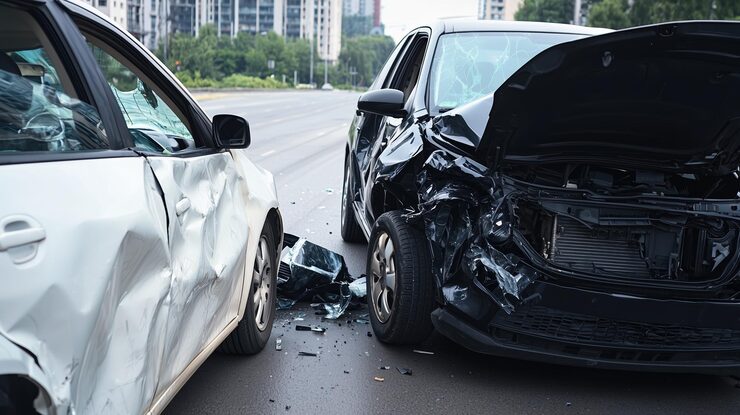
Neat-Supermarket7504 was involved in a very low-speed rear-end collision at a stoplight. The visible damage appears minimal—only two small punctures caused by the other vehicle’s license plate. The trunk functions normally, and there is no obvious damage to the bumper or undercarriage. However, a mechanic inspection is still recommended to rule out hidden alignment or structural issues.
Even in low-impact crashes like this, liability is not always as straightforward as it seems. For a broader overview of accident scenarios, see our guide on types of car accidents.
Can the Front Driver Share Fault in a Rear-End Collision?
Although rear-end accidents are often presumed to be the fault of the trailing driver, there are situations where the front driver may also share responsibility.
This is determined under legal principles such as comparative negligence, which allows fault to be divided between both parties based on their contribution to the crash.
To understand how fault rules differ across cases, see our detailed guide on who is at fault in a car accident and comparative vs contributory negligence.
Situations Where the Front Driver May Share Liability
1. Sudden or Unsafe Braking
If a driver brakes abruptly without a valid reason, the trailing driver may not have enough time to react. This can lead to shared fault depending on the circumstances.
2. Poor Visibility or Unexpected Stops
Stopping suddenly in areas with limited visibility—such as intersections or curves—can increase collision risk and may contribute to shared liability.
3. Faulty Brake Lights or Signal Issues
If the front vehicle has broken brake lights or malfunctioning signals, the rear driver may not be properly warned of stopping behavior. This can significantly impact liability assessment.
4. Distracted or Reckless Driving
Unsafe driving behaviors such as distracted driving or erratic speed changes can also contribute to rear-end collisions.
For more examples of fault scenarios, see our guide on left turn accident fault at intersections and related liability cases.
How Fault Is Proven in Rear-End Collisions
Insurance companies and attorneys rely on evidence to determine responsibility, including:
- Police reports
- Witness statements
- Dashcam or traffic camera footage
- Vehicle damage analysis
For a deeper breakdown of what evidence matters most, read our guide on car accident evidence.
What Insurance Companies Look At
Insurers closely analyze:
- Impact points and vehicle positioning
- Driver behavior before the crash
- Road and traffic conditions
They often use this data to determine settlement value and liability distribution. Learn more about how insurers evaluate claims in insurance adjuster car accident claims.
Understanding Comparative Negligence in Practice
Under comparative negligence rules, fault is assigned as a percentage.
Example:
- Rear driver: 70% at fault
- Front driver: 30% at fault
Compensation is then adjusted accordingly.
This principle is explained in detail in our guide on comparative vs contributory negligence.
Why Even Minor Rear-End Collisions Matter
Even low-speed impacts can result in hidden damage such as:
- Frame misalignment
- Sensor or trunk structural issues
- Suspension or alignment problems
For this reason, it is important to understand injury and damage risk patterns in rear-end crashes, including cases like rear-ended at a red light.
What to Do After a Rear-End Collision
To protect your claim:
- Document all damage with clear photos
- Obtain full insurance details from all drivers
- Avoid admitting fault prematurely
- Get a full mechanical inspection
For a step-by-step guide, see what to do after a car accident.
Also be aware of critical errors that can reduce compensation in car accident mistakes.
Legal and Financial Considerations
Car accident claims often involve:
- Settlement valuation
- Legal representation costs
- Insurance negotiation tactics
- Claim timelines and deadlines
Learn more about compensation outcomes in average car accident settlement and legal costs in car accident lawyer fees.
If compensation is disputed or denied, review car accident claim denied and car accident claim timeline.
When Legal Help Becomes Important
Shared fault cases can significantly reduce compensation if not handled correctly.
In such situations, legal guidance may help determine whether hiring representation is worthwhile. See is a car accident lawyer worth it.
For complex disputes, you may also compare outcomes between settlement and litigation in lawsuit vs settlement after a car accident.
Key Takeaway
Rear-end collisions are not always automatically the rear driver’s full responsibility. In certain situations, the front driver may share fault depending on driving behavior, vehicle condition, and available evidence.
Proper documentation, timely reporting, and understanding comparative negligence rules are essential to ensure a fair claim outcome.